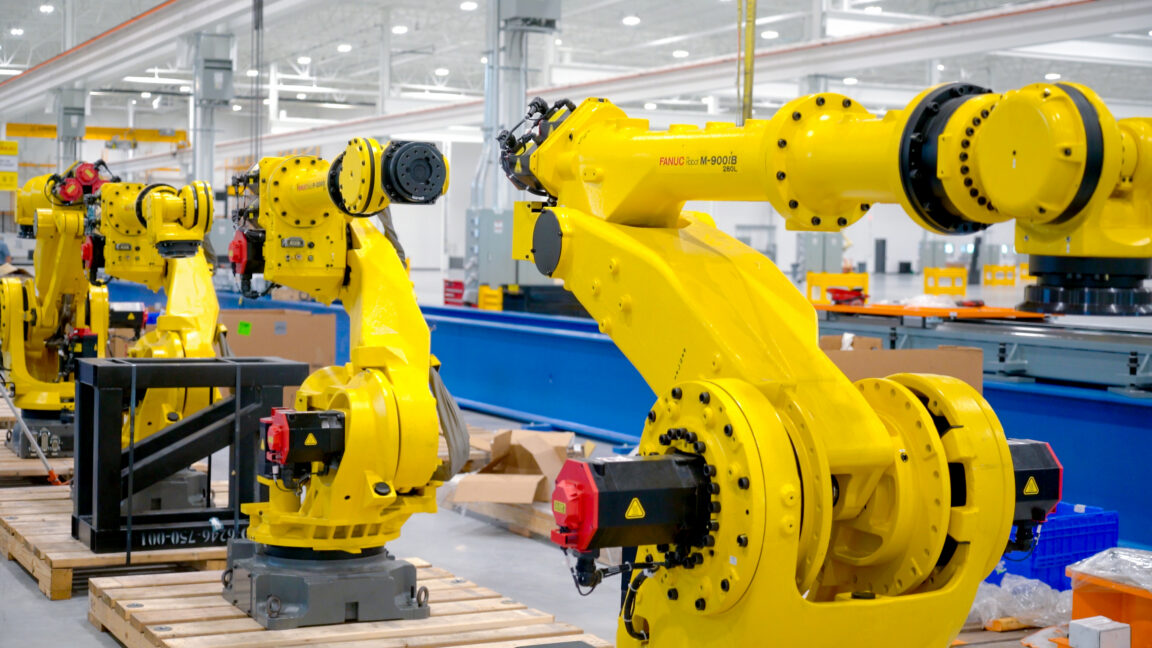
A new presidential proclamation issued on October 28 has designated foreign-made industrial robots as a potential national security threat, initiating trade negotiations that could ultimately result in new tariffs on critical factory equipment. The directive directs US officials to work with foreign trading partners over the next 180 days to adjust imports of robotics, industrial machinery, and their components. If no satisfactory agreements are reached within that timeframe, the administration has warned it may impose tariffs, quotas, or additional import fees.
The policy marks a significant broadening of federal scrutiny over foreign automation technology. In July 2026, the Federal Communications Commission placed bans on foreign-made consumer and commercial robotics, including robotic vacuums, four-legged robot dogs, and humanoid robots. However, that earlier action explicitly exempted stationary factory hardware, such as the fixed robotic arms heavily used in automotive assembly plants and logistics hubs. The new directive brings those heavy industrial systems into focus.
Security Findings and Economic Impact
According to the proclamation, industrial machinery and robotics serve as vital components for building military weapon systems and supporting critical infrastructure. An investigation led by US Secretary of Commerce Howard Lutnick reported that heavy reliance on foreign-made systems presents risks to the domestic industrial base and impairs long-term national competitiveness. Commerce Department findings also highlighted cybersecurity vulnerabilities, warning that unsafe hardware or software configurations could leave manufacturing infrastructure exposed to severe operational disruption.
Yet the economic implications of potential tariffs present a immediate dilemma for major American manufacturers. Companies across the automotive, aerospace, defense, and technology sectors—including General Motors, Ford, Tesla, Boeing, Lockheed Martin, and Amazon—depend heavily on specialized factory robotics. Because domestic suppliers currently lack the capacity to meet demand for heavy-duty industrial machinery, American firms largely source equipment from global industry leaders, including Switzerland’s ABB, Germany’s KUKA, and Japan’s FANUC and Yaskawa.
While these foreign robotics manufacturers have expanded their engineering and assembly presences within the United States, no domestic producer currently manufactures heavy-duty hardware capable of replacing imports at scale. The administration’s proclamation explicitly acknowledges this gap, noting that American robotics manufacturers do not produce enough equipment to satisfy national security requirements.
Manufacturing Costs and Trade Concerns
If trade talks fail to produce new agreements within six months and tariffs are implemented, the financial burden will fall directly on importing American companies. Observers note that raising the cost of imported machinery could complicate efforts to expand domestic production lines, particularly as the United States remains the world's second-largest market for industrial robotics, with nearly 38,500 new installations reported in 2025.
Critics of the trade strategy contend that raising costs on core equipment undermines domestic industrial growth rather than protecting it. As one commentary noted:
"He’s been doing this for years. A lot of our tariffs on Europe made manufacturing equipment much more expensive. And to top it off we added tariffs to the materials needed to make things in order to protest the much smaller and lower value refining and extraction sectors."
Industry participants also emphasize the recursive nature of automation production, pointing out that domestic robotic manufacturing relies heavily on existing robotic infrastructure:
"Robot guy here. The best way to manufacture robots is with a lot of robots. I'll let you figure out how we get from A to B."
Looking Ahead
For now, the proclamation sets off a 180-day negotiation clock rather than an immediate ban or tariff rate. Even if tariffs or trade limits are ultimately enacted, history suggests exemptions remain possible; previous regulatory actions, such as those involving major domestic technology firms, included waivers allowing companies to continue using essential foreign-made equipment when domestic alternatives were unavailable.
How trade representatives navigate the upcoming negotiations will determine whether US manufacturing can successfully balance supply-chain security with the practical realities of industrial automation.

